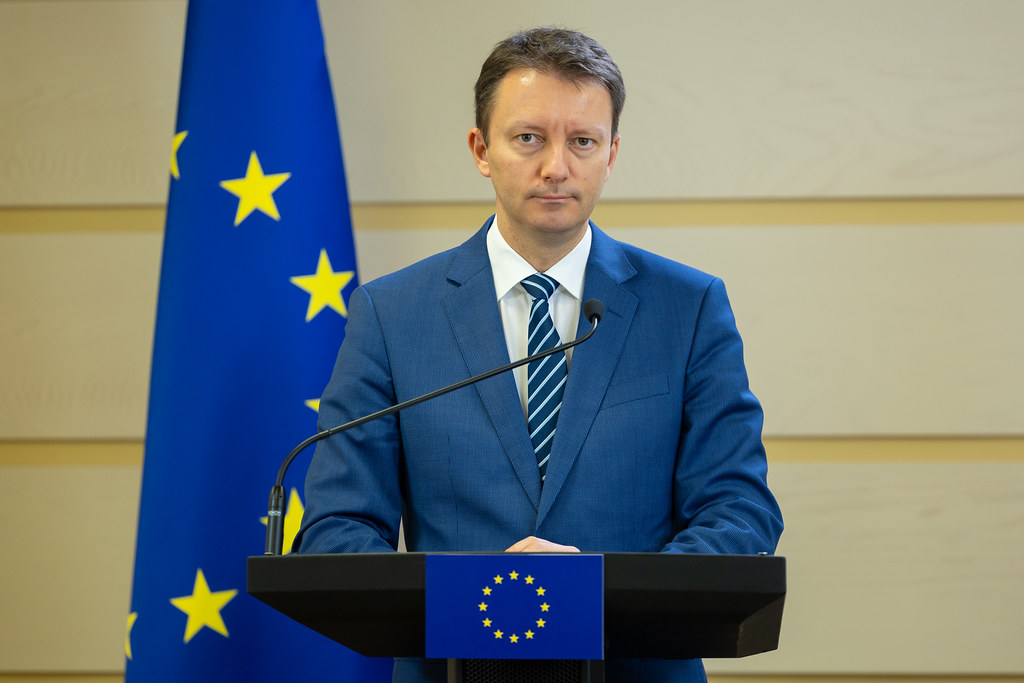
Ireland has drawn sharp criticism for its performance during its EU presidency, with senior officials calling for more substantial progress. Siegfried Mureșan, a European Parliament member, highlighted concerns over the lack of meaningful new solutions. He emphasized that the EU budget should be driven by political vision rather than a narrow financial approach.
Mureșan’s comments came during a session of the European Parliament, where discussions focused on the effectiveness of Ireland’s leadership. The criticism follows a series of stalled negotiations on major EU reforms, including financial transparency and structural changes to the bloc’s decision-making processes.
This marks the second time Ireland has led the EU in recent years, following its presidency in 2019. During that period, the country faced similar scrutiny over its ability to advance key legislative proposals. The current term, which began in July 2024, has seen limited progress on issues such as digital governance and climate policy.
The EU’s internal dynamics remain tense, with member states often divided on the pace and direction of reform. Ireland’s leadership has been seen as less impactful compared to previous presidencies, raising questions about its capacity to influence the bloc’s agenda. As the presidency nears its end, expectations for tangible outcomes remain low.